

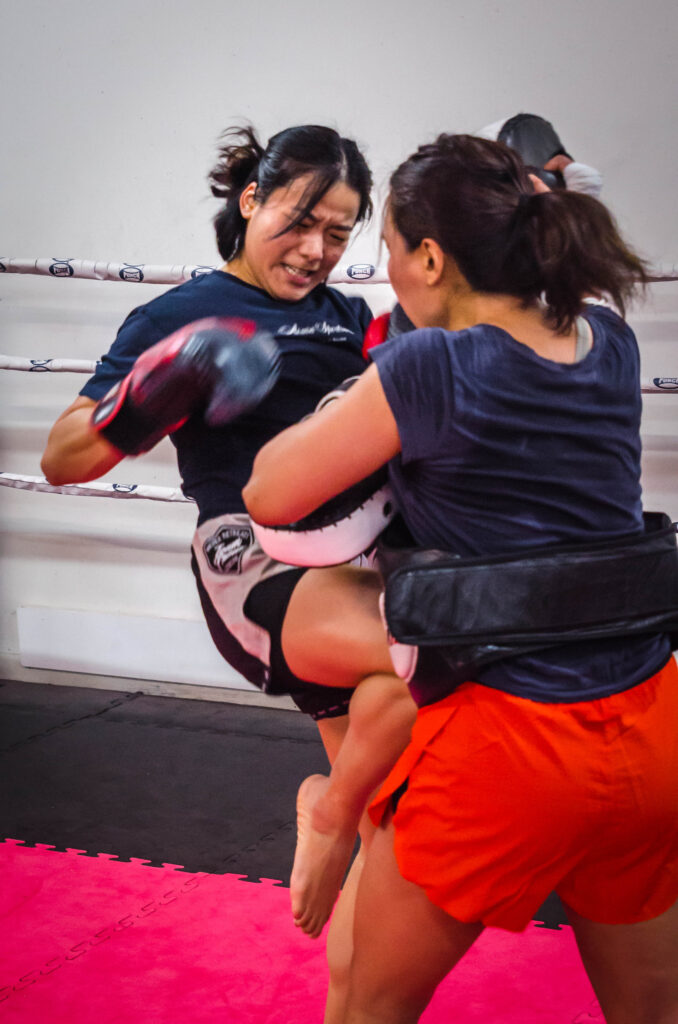
A lot of people want the same thing.
Not to become a fighter.
Not to prove anything.
Just to feel safer and more confident in their body.
Especially women – but honestly, anyone who doesn’t love the idea of a loud, ego-driven gym.
If you’ve ever thought:
- “I want self-defence skills, but I don’t want the macho vibe.”
- “I’m a beginner and I don’t want to feel judged.”
- “I’m not super fit yet – I just want to start.”
This is for you.
This isn’t a hype piece. It’s a reminder that self-defence confidence can be built in a way that feels respectful, supportive, and genuinely empowering.
First: what self-defence confidence actually is
Self-defence confidence isn’t just about learning a few moves.
It’s the combination of:
- awareness (noticing what’s happening early)
- boundaries (being able to say no, clearly)
- calm under pressure (not freezing as easily)
- physical capability (knowing your body can do hard things)
- self-trust (believing you can handle yourself)
And the good news is: you don’t need to be aggressive to build any of that.
The problem with the “macho” approach
Some places treat confidence like something you earn by being tough.
But for a lot of beginners, that approach does the opposite:
- it makes you tense
- it makes you self-conscious
- it makes you feel like you have to perform
- it makes you worry you’ll look silly
If you’re already nervous, an ego-heavy environment can make starting feel 10x harder.
A better approach is simple:
Confidence grows faster in an environment that feels safe.
Safe doesn’t mean easy. It means respectful.
What a supportive self-defence environment looks like
If you’re choosing a gym or program – especially as a woman or a beginner – here are green flags that matter more than the style itself:
- Coaches are calm, clear, and consistent (not yelling or shaming)
- The culture is ego-free (people help each other)
- Beginners are welcomed and guided, not thrown in the deep end
- There are modifications for fitness levels, injuries, and confidence
- Safety is taken seriously (controlled drills, good supervision)
- You leave feeling better, not smaller
If you find that environment, you’ll learn faster – and you’ll actually want to come back.
Why Muay Thai builds confidence (without needing aggression)
Muay Thai is practical, but it’s also structured.
That structure is what helps beginners feel safe.
Here’s what tends to build confidence over time:
1) You learn to stay calm while your heart rate is up
A lot of fear is physical.
When your body feels stressed, your brain says: “Danger.”
Training teaches you something powerful:
- “I can breathe.”
- “I can think.”
- “I can keep going.”
That carries into everyday life – walking to your car at night, setting boundaries, dealing with confrontation, even just feeling more grounded.
2) You build real-world self-trust
Self-trust doesn’t come from reading about confidence.
It comes from evidence:
- showing up when you’re nervous
- learning a new skill
- improving week to week
- doing something hard and real
You start to think: “If I can do that, I can handle more than I thought.”
3) You practise boundaries in a physical way
A lot of people – especially women – have been socialised to be polite, even when uncomfortable.
Training (done properly) helps you practise:
- taking up space
- saying no
- holding your ground
- being assertive without being rude
That’s confidence.
4) You get stronger in a way that feels empowering
Not “tiny and perfect.” Not “punished into shape.”
Just stronger.
Stronger legs, stronger posture, stronger lungs, stronger mindset.
And strength changes how you move through the world.
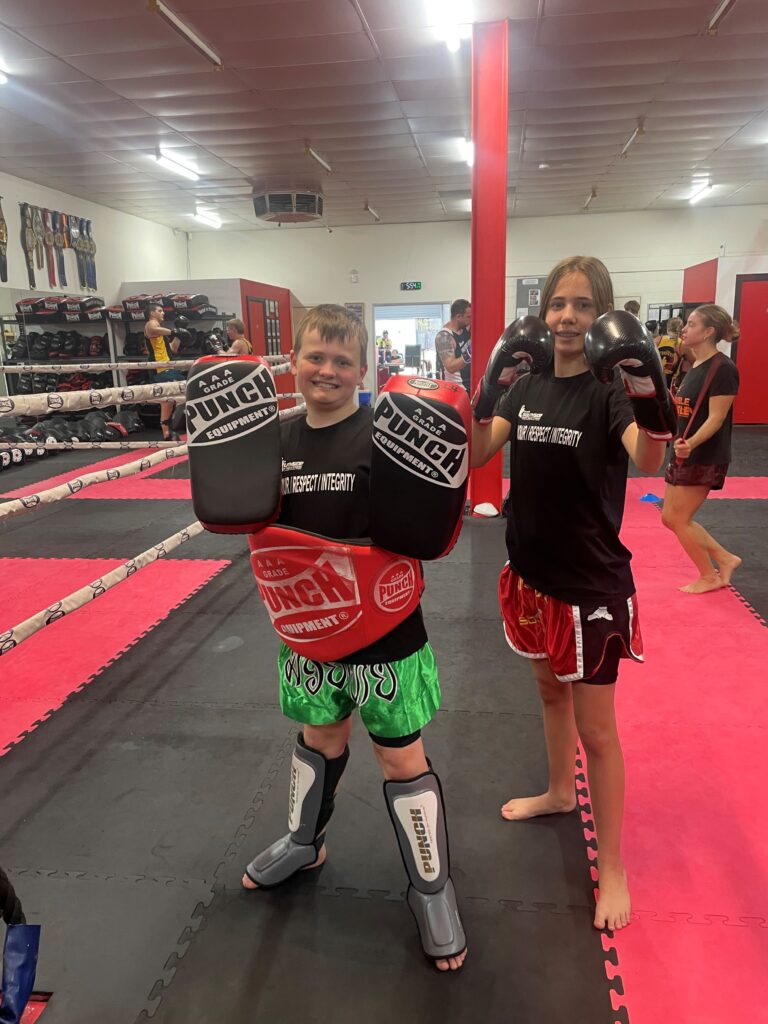
For parents: why this matters for your kids too
If you’re a parent reading this, you’re not just thinking about yourself.
You’re thinking: “How do I raise a confident kid?”
Kids learn confidence by watching it.
When they see you:
- try something new
- practise boundaries
- take care of your body
- build confidence without needing to be loud
That’s a lesson.
And it’s a powerful one.
A gentle starting plan (for nervous beginners)
If you’re keen but nervous, here’s a simple way to start without overwhelming yourself:
- Decide your goal: confidence, fitness, self-defence skills, community
- Commit to 2 sessions (not forever)
- Be a beginner on purpose: your job is to learn, not impress
- Track one win per session: “I showed up” counts
- Ask for help early: good coaches want you to feel safe
Confidence is built in small reps.
Not big speeches.
Final thought
You don’t need a macho vibe to build self-defence confidence.
You need:
- a supportive environment
- good coaching
- structure
- safety
- and a place where beginners are respected
If you’ve been wanting to feel stronger, safer, and more confident – this is your reminder that you can start in a way that feels like you.
And if you’re curious, most good gyms will let you try a session first so you can feel the vibe for yourself.
)